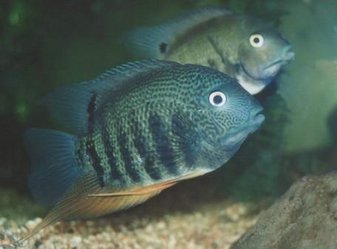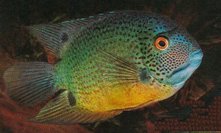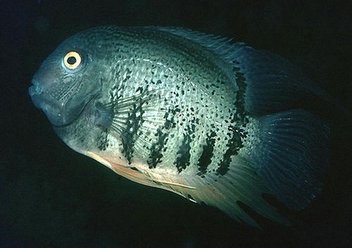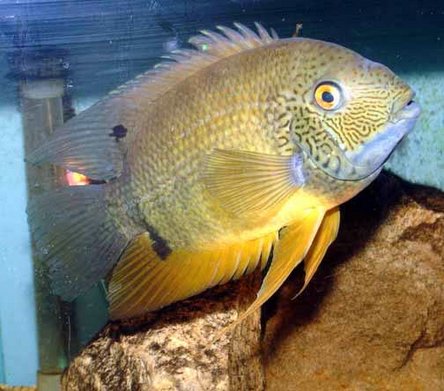
Severum


Data Sheet

Scientific Name: Heros Severum, Cicilasoma Severum
Other Name:Band Cichlid
Family: Cichlidae
Origin:South America
Adult Size:10 inches (26-27 cm)
Social:Shy fish (for cichlids)
Lifespan:10 years
Tank Level: middle and bottom levels


Minimum Tank Size:55 gallons
Diet:Omnivore / Vegetarians
Breeding:Egg layer
Care:Easy
Ideal pH: 6.0-6.5
Temperature: 73-80 F (23-27 C)
Tank setup: Places with rocks for hiding.
Sexing: Adult males have longer, more pointed fins. The female has a dark patch on the dorsal fin above the second-last band. Females are also generally paler in colour and don't tend to have the blue squiggles on the head.


Description:

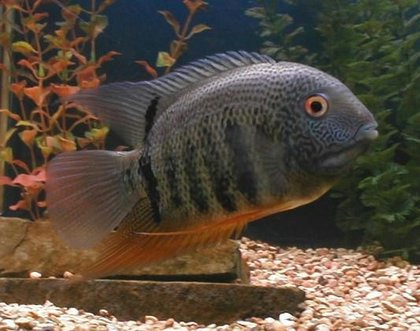
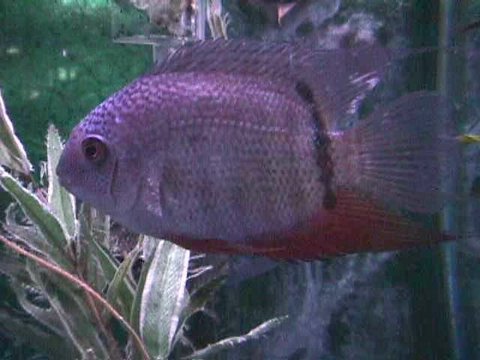
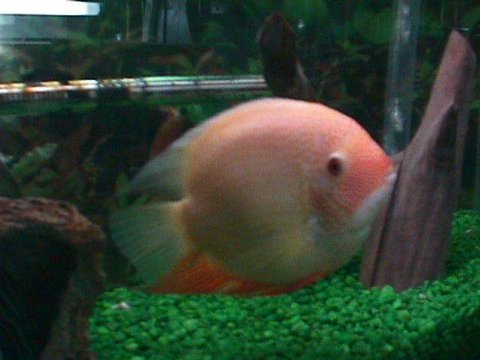
Severums have an oval-shaped, laterally compressed body, similar though stockier and more elongated than a Discus. They have large red eyes and a small, pointed mouth. The body colour starts off as golden olive green, which darkens to a deep teal green when breeding. Maroon and electric blue squiggles can often be found in the cheeks and face.

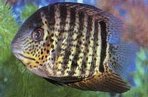
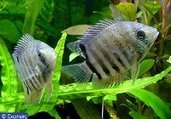
One of the most distinctive features of this fish is that the forehead forms a smooth curve from the snout into the body to the dorsal fin, mirrored ventrally along the chin and belly. But the most striking feature of this fish is the seven to eight faint vertical black bands mark the body.

Habitat/Care:

Severums are widespread throughout the northern Amazon Basin and Guyana. In their natural habitat, they can be found in sections of deep, calm water with submerged trees or in close contact with the island-like rafts of vegetation that are found in some rivers.

The tank should contain rocks and other hiding places, as this is a shy fish and appreciate places to hide. Clean water is essential for good health and growth, and as like all cichlids, good filtration is important. Severums do like to have cover in their tanks which can pose a bit of a problem as they will tend to munch on any live plants in the tank. A cave of some kind is also appreciated, as Severums like to have somewhere to retreat to when the mood strikes them.

Mixing with other fishes:

Despite its size, this is a fairly peaceful, shy and inoffensive cichlid. They could be kept with other fishes of similar size, habits and temperament. Severums can usually hold their own in a rowdy cichlid tank as long as shelter is provided.

Nippy, boisterous and overly aggressive tank mates should be avoided - as should very small fish. Severums have been known to prey on smaller fishes.

During breeding time, Severums tends to be highly territorial but as long as there is sufficient space there is rarely serious damage inflicted.

Diet:

Severums have strong vegetarian tendencies, but are not fussy about what they eat. Severums natural food is much like any other cichlid their size from South American. It mainly consists of insects, small crustaceans and some vegetable matter. They do well on a varied diet, including crickets, earthworms, mealworms, good quality pellets and home-made food. They will readily accept frozen foods (bloodworm), flake foods or small pellets. They relish live black worms and will also eat vegetables such as shelled green peas and blanched lettuce.

Breeding:

Severums form strong pair bonds and are an open substrate spawner, although they do not seem to pair as readily as other South American cichlids. This is because Severums can be choosy about their partner, often engaging in lip-locking activities to see if their mate is "worthy". Even at a young age, juveniles have been known spar. Severums prefer to lay their eggs on a pre-cleaned vertical or diagonally sloping surface. During breeding the pair will become highly territorial and chase tank mates away from the spawning site.

Breeding pairs are best developed through the raising of six or eight young together. Even at relatively young, small size Severums may be sexed by the absence of markings on the gill covers and smaller body size of females. Pairs should be either housed with other Severums (in a large enough system for two or more territories) or isolated.

The female may lay up to 1000 adhesive eggs. Like all Cichlids, both parents guard the eggs and the fries. When the fries hatched, they are moved to a pit that has been dug in the gravel. It is not uncommon for young pairs to have several failures before their fries are successfully raised.

Photo Galley

Got a photo? Contact me.

References Cited:

1. Heros Severum (Heckel, 1840), [Online], Available http://www.wetpetz.com/severum.html
2. Tracy, Severum [Online], Available http://www.worldcichlids.com/fishprofiles/severums.html
3. The poor man's discus - Cichlasoma Severum [Online], Available http://www.aqualandpetsplus.com/Cichlid,%20Severums.htm

Blood Parrots

This post is specially dedicated to my colleague Keng Soon,whose love for this speices of fish prompted me to find out more.


Data Sheet

Scientific Name: None
Family: Cichlidae
Origin:Crossbred, not available naturally
Adult Size:8 (20cm)
Social:Peaceful fish, but territorial
Lifespan:10 years
Tank Level: All levels

Minimum Tank Size:20 gallons (young) -50 gallons (adult)
Diet:Omnivore
Breeding:Egg Layer
Care:Easy-medium
Ideal pH: 6.5-7.0
Temperature: 72-82 F (22 - 28 C)
Tank setup:

Some rocks and places to hide is preferred
Sexing:Not Known. Sorry


Description:

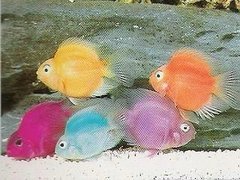
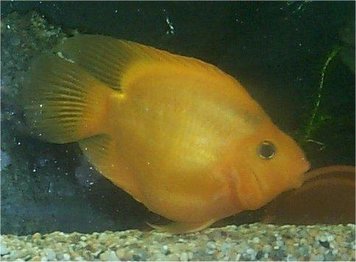
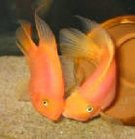
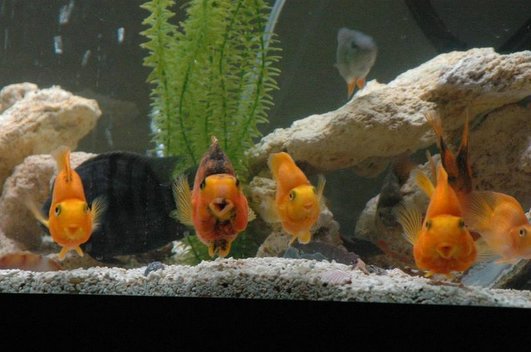
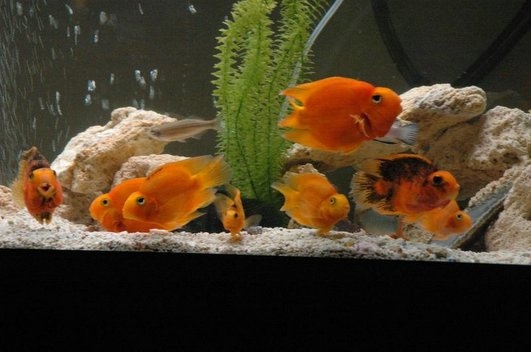
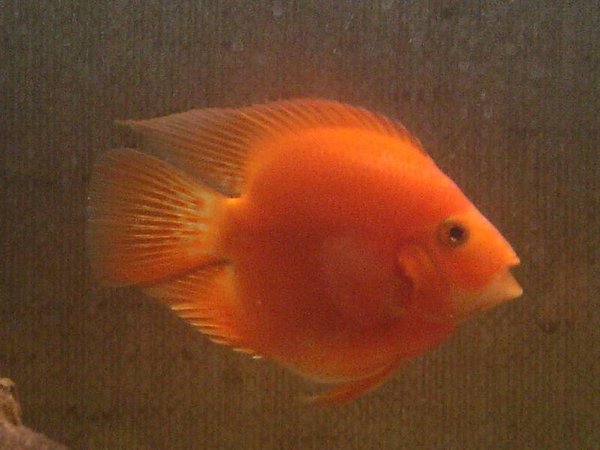
The Blood Parrot is a brightly colored, odd shaped Cichlid. As its name suggests, the fish has a red body and a mouth that resembles a beak. These fish somewhat resemble fancy goldfish and appear to swim awkwardly due to their deformed swim bladders.


Habitat/Care:

Blood Parrots like an aquarium with lots of rock formations and caves for retreating and hiding. Their habitat should be roomy and provide plenty of hiding places, so they can set up their own territory. Rocks, driftwood, and clay pots on their sides are good options. Like other cichlids they will dig in the gravel, so choose a substrate that is not too rough. Plants are not essential though they do not harm them.

Mixing with other fishes:


The blood parrot is a cross-bred from cichlids parents, and you would expect these fish to be highly territorial and aggressive. However, these fish are surprisingly shy and peaceful - and many owners have successfully kept them in a community tank with other mid-size fish such as danios, angelfish, and catfishes. However, true to their parents' heritage, these fishes can be highly territorial and may fight with their tank mates if kept in a community tank.

If these fishes are kept with other cichlids, care should be taken to ensure that their tank mates are not overly-aggressive.

Diet:


Since they are omnivorous, the Blood Parrot will generally eat all kinds of live, fresh, and flake foods. Flake food or pellets are recommended as these food usually contains a mixture of vegetables and meat. Brine shrimp (either live or frozen) or Blood worms can be given to them as a treat.

When the parrots are bigger, they begin to prey on smaller fish, such as guppies, neon tetras etc.

Breeding:

The Blood Parrot, Bloody Parrot, or Blood Parrotfish have been known to breed but most often their eggs are infertile unless they are paired with a non-hybrid fish. I am unable to find out more about breeding blood parrots at the moment, but will endeavor to do so.

Photo Galley


Got a photo? Contact me.


Reader's Pet


Here is a contribution from a reader name Levah Lightfoot.


I've read many comments on this website about blood parrots. I've laughed with what was said about some of them and the things they do. Well here I am writing about our blood parrot, "Angelina", she is so much fun to watch and boy! does she have character plus!!! We have 9 grandchildren, when they come they go to see "Angelina", she seems to know them or at least she always comes to the front of the tank and watches them. She will follow their finger accross the front of the tank. If anyone is in the room she is always at the front of the tank looking at them. When we watch T.V. at night, her feeding time she won't stop looking at us until she gets her food. Now she is the leader of the tank, she lives with four Silver Dollars, two Ballah Sharks, one small catfish and a very large algea fish. When she eats she gets what she wants and they all get the rest, they chase each other for food BUT no one chases "Angelina". It's so much fun to watch her and she seems to like it when you put your hands or arm in the tank, she will rub your hand or arm as if to say, "Hello!". We have a large German Shephard, if you ask her , "where is Angelina?" she will run to the tank and look and "Angelina" will come to the front of the tank and look at the dog. Crazy yes!

Angelina in a PotAngelina outside pot
Angelina with Ballah SharkAngelina with Silver Dollars

References Cited:

1. Shirile Sharpe, [Online], Available http://freshaquarium.about.com/cs/livebearers2/p/redtuxedo.htm
2. Shirile Sharpe, [Online], Available http://freshaquarium.about.com/cs/cichlids1/a/bloodparrot.htm
3.
David Brough, [Online], Available http://animal-world.com/encyclo/fresh/cichlid/blparrot.php
4. Micheal McWin [Online], Available
http://www.aquariacentral.com/fishinfo/fresh/bparrot.shtml